Guest Blog: CA in the aftermath of the Fukushima disaster

CA has been applied in some sensitive locations, but perhaps never in such a situation as Aug Nishizaka (Chiba University) describes – the aftermath of the earthquake, tsunami and nuclear reactor disaster at Fukushima in 2011. In this guest blog Aug shows us that interaction research can be inspired by humanity and civic consciousness.

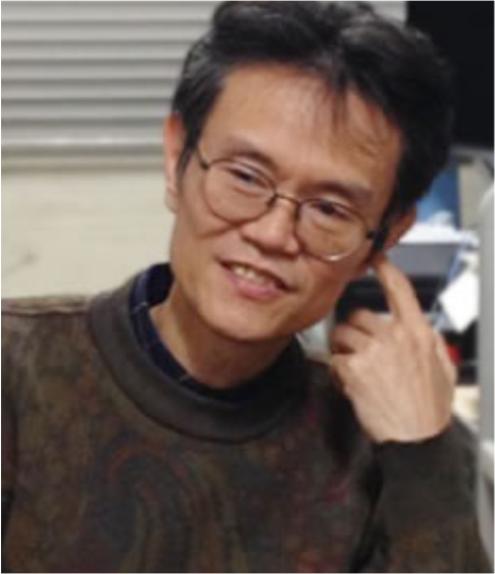
Aug Nishizaka, Chiba University

Aug Nishizaka, Chiba University

A huge earthquake (called the Great East Japan Earthquake) occurred in northeastern Japan on March 11, 2011. More than 18,000 individuals were killed in tsunamis triggered by the earthquake, and the subsequent explosions at a nuclear power plant in Fukushima Prefecture (about 220 km northeast from Tokyo) forced more than a hundred thousand people to evacuate their homes. Continue reading

Guest blog: Researching Medical Decisions in an Accident and Emergency Unit

Studying the to- and fro- of a busy medical facility is not easy, though the promise is that the results can bear on what are literally life or death matters. Vasiliki Chrysikou and Fiona Stevenson give us a fascinating account of working in a UK Accident and Emergency unit.

Will Gibson, Caroline Pelletier, Fiona Stevenson and Vasiliki Chrysikou - the University College, London research team (Sophie Park not pictured)

Will Gibson, Caroline Pelletier, Fiona Stevenson and Vasiliki Chrysikou – the University College, London research team (Sophie Park not pictured)

Setting up our study was a complex business, and threw up all sorts of issues which needed thoughtful – and sometimes sensitive – decisions. Here are some of the most salient things to come out of our  team’s journey towards collecting video and audio recordings, and ethnographic material, for our CA study of decision making in A&E. Continue reading

Volume 48 issue 2 now out: Abstracts of Articles

2015 Volume 48, issue 2 is now out. Look out for these articles:

Maurice Nevile
The embodied turn in research on language and social interaction

photoI use the term the embodied turn to mean the point when interest in the body became established among researchers on language and social interaction, exploiting the greater ease of video-recording. This review paper tracks the growth of “embodiment” in over 400 papers published in Research on Language and Social Interaction from 1987-2013….. more

hrls_a_1025499_f0001_b

Continue reading

Guest blog: CA in Japanese and English

Tim Greer’s guest blog is a very welcome account of the pleasures (and pains) of working in two languages which are phonetically, syntactically and typographically very different.

Tim Greer, Kobe University, Japan

Tim Greer, Kobe University, Japan

Having lived in Japan for over 20 years, I have learned how to juggle Japanese and English in my daily life. And since my research focuses on Japanese/English bilingual interaction and learner talk, I have also had to discover ways to deal with these two very different languages in my analysis as well.

Which script?

One of the first decisions I needed to make was which script to use when transcribing. Japanese uses a combination of four “alphabets”—one pictographic, two phonetic and one Romanized. So any word can be written in four ways: Continue reading

Guest blog: What I learned setting up the EM/CA wiki

Saul Albert has a terrific blog of his own, but has also been part of a lively and committed team setting up and curating the indispensable EM/CA wiki. Here he explains its genesis and its ambitions.

Saul Albert, Queen Mary (University of London)

Saul Albert, Queen Mary (University of London)

The EM/CA wiki (http://emcawiki.net) is a wiki bibliography and information repository for Ethnomethodology and Conversation Analysis and has been running since July 2014. This guest blog post aims to give readers a little background on the site and what I learned from setting it up.

The first thing to say about the EM/CA wiki is that it is by no means an individual project, and only exists because of the long and dedicated work of Paul ten Have setting up and running his Ethno/CA News site from 1996-2014. During that time Paul published tens of thousands of EM/CA bibliography entries along with a treasure trove of useful information and links assembled at a time before there were as many primers in EM/CA methods for students and researchers. Continue reading

Guest Blog: Nesting within your discipline

Our guest is Eric Laurier, Institute of Geography & the Lived Environment, Edinburgh University (whose own blog has the unimprovable title Ordinary Life As It Happens). Here he  gives us a capsule account of the EM/CA culture wars in the social sciences as they’ve played out in Human Geography.

Eric Laurier, University of Edinburgh

Eric Laurier, University of Edinburgh

On joining the company of ethnomethodology and conversation analysis, you are told war stories of the early history of incomprehension, misunderstanding and antipathy it met from prominent figures in Sociology. The Purdue Symposium in Ethnomethodology from 1968 provides a transcript of one of the skirmishes that illustrates very nicely all of these qualities. In other disciplines there are other histories that have lead to other sorts of relationships.

Read more …

Guest blog: From CA studies to Theology

Timo Kaukomaa is finishing off his doctoral studies in one of the world’s premier centres of interactional analysis. It’s an honour to host this guest blog, in which he explains his work – and why he is leaving it for a very different life.

Timo Kaukomaa, Helsinki University

Timo Kaukomaa, Helsinki University

I am a PhD student in Sociology at the University of Helsinki, and a member of the Finnish Centre of Excellence in Intersubjectivity in Interaction, which comprises CA researchers in the fields of linguistics, sociology and behavioural sciences. I will soon defend my PhD thesis (in June), and I will reflect here upon my thoughts regarding my PhD project and future plans.

Read more …

More ROLSI articles use images – but still a minority

Are we now publishing a great number of articles with images? I had casually formed the impression that more than half the articles in recent issues of ROLSI featured images of some kind. But on reflection this struck me as unlikely, so I decided to check – and while I was about it, to do a count from the earliest volumes I had to hand on my shelves.

ROLSI articles in total, and with images, per year since 1996

ROLSI articles in total, and with images, per year since 1996

The graph above tells the story.  As you can see, the number of images per volume (that is, per year) does grow, both relatively and absolutely. Continue reading

Guest Blog: Presenting Multi-Modal Analyses: Capturing and Communicating Nonverbal Behaviors

Multi-modal work has been an increasing, and welcome, presence in ROLSI, and here Jackson Tolins gives us a blow-by-blow account of working with complex data.

shapeimage_5

Jackson Tolins, UC Santa Cruz

For researchers of language and social interaction, capturing the intricacies of spontaneous talk-in-interaction has always posed a challenge. We hope to present in our manuscripts not only what is said, but the subtle details of how it was said, capturing the critical features of the talk relevant to how the interlocutors create, coordinate, and respond in conversation. For talk, this challenge has been met with the standardized transcription practices such as the Jeffersonian system.

Read more …

Downsizing the dissertation

Drake_pic

Veronika Drake, now at Saginaw Valley State University

We are very pleased to have a guest blog from an early-career researcher.

Veronika Drake , who did her doctoral work at the University of Wisconsin-Madison, shares the experience of extracting publishable articles from one’s thesis.

A dissertation represents years of painstaking data collection, transcription, analysis, writing, revision, and editing. Eventually, we defend and deposit it. And it is here that paths diverge. Some people move on to a completely new project, and others plan to revise and submit the manuscript for publication as a monograph. Still others decide to revise a portion of the dissertation for an article-length publication. I fall into the latter category, opting for the ‘downsizing’ option and submitting a portion of my dissertation to ROLSI.

Read more …