One of the most adhesive binding agents for researchers in EM/CA is the weekly get-together, whether to pore over data or to discuss the week’s chosen reading. Some reading groups and data sessions come and go, and some have an admirably long and unbroken history. One of the latter is the Ethnomethodology Reading Group originally based at Manchester University. Here, Phil Hutchinson delves into its past and looks forward to its future.
Phil Hutchinson, Manchester Metropolitan University
Every Wednesday, at 10am UK time, a familiar pattern unfolds on my laptop screen. I open MS Teams and watch as people log on from across the globe. Most have the week’s PDF open on a second screen. For the next three hours we do something simple but increasingly rare: we talk, in detail, about a piece of ethnomethodology, conversation analysis, or related philosophy that everyone has read closely. This is The Ethnomethodology Reading Group.
The roots of the group go back to Manchester UK in the late 1960s, when Wes Sharrock began a weekly discussion group that soon became a fixture: students, colleagues, and visitors knew they could just turn up. In fine discussion-group tradition, the name never quite captured what went on in the group. Rather, the reading followed the distinctive predilections of the Manchester EM/CA group and ranged widely: classic EM/CA, Wittgenstein, Wittgensteinian philosophy, Ordinary Language Philosophy, and Phenomenology.
Going online
When the Covid-19 pandemic hit in early 2020, Alex Holder and I moved the meetings online. We set up a Google Drive folder for distributing readings, met first on Zoom and then on Teams. The basic format remained the same, only now we were online and the meetings grew from two hour sessions to three. The readings are agreed collectively: sometimes week-to-week, sometimes by committing to working through “big books” chapter-by-chapter.
Since 2020 those big books have included Wittgenstein’s Philosophical Investigations, On Certainty and Last Writings on the Philosophy of Psychology, vol. 2; Garfinkel’s Ethnomethodology’s Program; Aron Gurwitsch’s Field of Consciousness; Merleau-Ponty’s Phenomenology of Perception; Frank Ebersole’s Things We Know; and Gus Brannigan’s The Use and Misuse of the Experimental Method in Social Psychology. We also spent a stretch with Jeff Coulter’s work, both to mark his death and to celebrate his writing.
In March 2023 we began what became a major joint project: we worked our way through Harvey Sacks’ Lectures on Conversation and LudwigWittgenstein’s Big Typescript(TS 213) in alternating two-week blocks, returning to each in turn over the course of about two and a half years, and finishing with the final Sacks lecture in September 2025. Speaking for myself, that project has been one of the most rewarding intellectual undertakings in which I’ve been involved. It has strengthened my conviction that Sacks is a worthy heir to Wittgenstein and an extender of his ideas in innovative directions.
The Lectures on Conversation read to me like detailed implementations of what Wittgenstein called grammatical investigation: a refusal to be rushed into “theory”, a determination to stay with the ways members themselves use words, and a patient recovery of what competent speakers already know how to do. Set alongside the Big Typescript and Philosophical Investigations, CA staples such as adjacency pairs, repair, and recipient design, in addition to membership categorisation, begin to look less like empirical discoveries in need of explanatory theory, and more like reminders—perspicuous presentations of everyday practical know-how that is usually taken for granted.
Calm and gently reflective discussion?
Not always! One of the liveliest sessions came when we reached Harvey Sacks’ remarks on a passage from E. E. Evans-Pritchard in Volume I, Part III, Lecture 17 of the Lectures on Conversation—unlikely material, perhaps, for one of our more animated mornings, but so it proved. It quickly turned into a heated debate about how one learns from Peter Winch’s Wittgensteinian philosophy and his own reading of Evans-Pritchard. Several members of the group have written on Winch, and the discussion became sharp and somewhat heated, culminating in a rather theatrical exit by one member. For a moment several of us wondered whether we were about to re-enact the famous incident where Wittgenstein (allegedly!) threatened Karl Popper with a poker; but being on Teams, and with central heating having largely replaced coal fires in the UK, no actual pokers were available (though some present that morning report a plastic radiator bleed key being thrown at the screen).
There have also been mornings when we have had to confront our limits more quietly. I still remember opening Teams to a rather sparse collection of faces as we reached the more technical, mathematical sections of the Big Typescript. Those who turned up gamely tried to work through them together; we all struggled, but those who stayed the course were, I think, rewarded. …I think. Those sections of Wittgenstein cost us a few members, perhaps. Over the years there have even been a few breakaway groups—“splitters”, as we affectionately call them—when clusters of regulars have gone off to pursue more specialised readings (or just avoid Wittgenstein on maths).
Then there are the debates that re-emerge every few months and never quite resolve: to what extent are Garfinkel’s studies and Sacks’ analyses continuous with Wittgenstein’s and Ebersole’s grammatical investigations? Does it really matter, for practical purposes, whether we work with naturally occurring data or carefully staged examples? On mornings when those questions flare up, it sometimes feels as though we ought to have a glass case on screen containing a symbolic poker with a label reading: “In case of argument over naturally occurring data versus imagined cases, induction versus grammatical investigation, break here”.
Present and future
Since finishing Wittgenstein and Sacks, we have returned, for now, to a more episodic programme. We recently spent several weeks on Goffman’s posthumously published “Felicity’s Condition” followed by Emmanuel Schegloff’s 1988 “Goffman and the Analysis of Conversation”. Next, we plan to work our way through the contributed chapters in Hedwig te Molder and Jonathan Potter’s Conversation and Cognition. The rhythm of the group continues to oscillate between close engagement with EM/CA “classics” and forays into whatever new or neglected work participants suggest.
A global group
Moving online also reshaped who takes part, and from where. What was once a meeting whose membership was effectively restricted to those within commuting distance of Manchester is now genuinely global. Since 2020, the group has included participants logging in from Canada, Czechia, Denmark, Finland, France, Germany, Hong Kong, Japan, Macau, New Zealand, Singapore, South Africa, Spain, Sweden, Switzerland, Thailand, the UK, and the USA. The disciplinary range is also diverse. My own background is in philosophy, though I am now based in a psychology department. Other members come from psychology, communication and media, medicine and health, sociology, criminology, science and technology studies, geography and education. The group also includes a practising psychotherapist and several retired academics. That mix is part of what makes the discussions so rewarding: it pushes back against increasingly siloed academic disciplines and keeps EM/CA in conversation with the traditions that have shaped it and that it has influenced—but also, and perhaps more importantly, sustains EM/CA as a living tradition that is in conversation with contemporary concerns.
What, if anything, makes this group distinctive? One feature is the tempo and duration of the discussions. Three hours on a single text, week after week, is unusual in contemporary academic life, where reading and reflection are often squeezed into what is left after teaching, admin, and the latest institutional demands. Another is the way we allow EM/CA texts to be in live conversation with philosophy and phenomenology, without reducing either to “background theory” or methodological window-dressing. For many of us, ethnomethodology has long been understood as a kind of praxeological phenomenology; discussing Garfinkel and Sacks alongside Gurwitsch, Merleau-Ponty, Wittgenstein, and Ebersole has helped us develop that thought.
A place to think
Above all, the group has become a place where people who care about EM/CA, and about the things that shaped it, can think aloud together over time. People drift in and out as jobs, family life, and time-zones permit, but many have been attending for years. And although we are firmly in the tradition of discussion groups whose names no longer fully capture what they do, we have at least avoided one famous precedent: in all our years of sometimes quite vigorous debate, no-one has threatened anyone else with a poker… yet.
Erving Goffman’s legacy is everywhere visible in the social sciences, and Wendy Leeds-Hurwitz‘s new book shines light on the “invisible college”of his contemporaries among his close circle and further afield. The result is a fascinating account of the intellectual climate of the 1960s-1980s, and a throughly engaging read for all whose work has felt the influence of Goffman down the ages.
Wendy Leeds-Hurwitz
In writing Mapping Goffman’s Invisible College (Leeds-Hurwitz, 2025), I followed the advice I was given in graduate school: to research something most others did not know about. The name, and the work, of Erving Goffman are of course well known in the social sciences; but he has typically been described as a “loner” and I wanted to throw some light on the intellectual environment surrounding him.
Here I will describe two elements: why I began this project in the first place, and a little about the research process.
Origin Story
I was invited to present as part of a celebrationin Brazil in 2022 honoring the 100th anniversary of Erving Goffman’s birth. I thought about what I knew that neither I nor others had already written about, given that an enormous literature discussing Goffman and his ideas already exists (full disclosure: I co-authored one of the books: Winkin & Leeds-Hurwitz, 2013, and wrote chapters for two others prepared in honor of the same anniversary: Lenz & Hettlage, 2022; Jacobsen & Smith, 2022).
Eventually I realized that as a doctoral student at the University of Pennsylvania in the 1970s, I had been research assistant at the Center for Urban Ethnography (CUE) while Goffman was there, and so I knew more about his role with CUE than most others. While writing that up, I realized there were in fact several other projects I knew something about which also had not yet been widely discussed, and added those in. I contacted the Penn archives with questions, and they were very helpful. Each project added more names of people who were part of Goffman’s invisible college. (Briefly, an invisible college describes a scholar’s connections to people who are not generally known to be part of their network.)
Erving Goffmann (Image: Creative Commons)
At least some members of his core group of colleagues at Penn should be familiar to most ROLSI readers: Dell Hymes, Bill Labov, Ray Birdwhistell, John Szwed, and Sol Worth. They were all involved in at least some of the major projects described in detail as successful, as well as at least some of the other projects covered in less detail, most of which were far less successful. The goal was not to stop after introducing the initial narrow cast of characters, but rather to demonstrate the range of people who were part of his extended network at Penn, and then beyond Penn.
My contribution to the 2022 celebration in Brazil has since been translated and published in Portuguese (in Martins & Gastaldo, 2024), but I wanted to publish in English as well. So, I visited both Penn’s archive and the American Philosophical Society (APS) archive in Philadelphia to get answers to additional questions arising as I expanded the scope of the story. (It was a pleasure to return to the APS since I had conducted some of my dissertation research there in the 1970s.) As the number of projects included in the story increased, so did my understanding of Goffman’s network, expanding not only across many departments and colleges at Penn but also to other universities (Chicago, Berkeley, Harvard, Indiana, Texas) and the National Institute of Mental Health. In the process, what was originally intended as an article grew into a book.
Research process: solving the jigsaw puzzle
Overall, this research was a complex jigsaw puzzle: 21 collections deposited in a dozen different archives each revealed different parts of the story; my task was to fit all the pieces together into a coherent story. Basically, I wrote up each project separately, and every time I located more information, I updated the relevant document. What was most surprising was just how often a folder related to one topic contained new information about another – a person who was involved who I had not yet known about, or a result that I had not yet seen documented elsewhere.
For example, a conference on the Comparative Ethnographic Analysis of Patterns of Speech in the United States, held in 1975 at Temple University, was funded by the Committee on Sociolinguistics of the Social Science Research Council (SSRC), and organized primarily by Joel Sherzer (a student of Hymes). Most of the relevant documentation was found in the Hymes Papers at the American Philosophical Society, but some was in various correspondence files (especially with Sherzer, Labov, and Allen Grimshaw) while much of the rest was located in several Committee files. The best surprise was finding the report of the event, prepared by Virginia Hymes as Rapporteur, which included detailed quotes, some from Goffman.
All archives outside of Philadelphia were contacted through email. (There are very good guides now available online revealing what information can be found in what archive, something that did not exist when I first conducted archival research for my dissertation.) I did not visit any of the other archives in person. Instead, once I had sorted out what I needed from each, the archivists could locate that documentation, copy it, and email it to me (usually for a fee). Since this research overlapped with years we were all being extra cautious due to COVID, that was important – in fact, some of the archives were still closed to in-person visits, but most of the archivists were able to be access their own records.
In the end, the vast majority of what is reported in this book was found in archives, and has not been previously reported. To give just one example, this time taken from the Allen Grimshaw papers (he was a sociologist at Indiana University who Goffman – as well as Hymes – corresponded with over decades). As a member of the Committee on Sociolinguistics at SSRC, Grimshaw organized the Multiple Analysis Project (MAP) as a way to compare different methods early in the development of sociolinguistics, and Goffman was one of the original members of MAP. This is one of the projects that failed, but we have much to learn from it nonetheless. One (of many) interesting things to know is that Goffman, even after leaving the group as a result of disagreements in terms of data collection (taking with him what Grimshaw referred to as his “constituency,” that is, Harvey Sacks and Emanuel Schegloff, who were also part of the project, but only so long as Goffman was), still visited Grimshaw at Indiana as previously scheduled a few months later, writing that he would never think “that such business could strike deep enough to wither affection.”
Professional quarrel Overall, it astonished me that such a short time after Goffman left MAP, taking Sacks and Schegloff with him, causing complications for Grimshaw and everyone else involved with that project from that point forward, he and Grimshaw were able to put history behind them to first organize all the details, and then actually manage a visit lasting several days, especially given that Goffman stayed in Grimshaw’s home. Perhaps people were simply more polite and considerate in the 1970s, but it seems unlikely that such behavior could be expected today of colleagues who had quarreled professionally to the point of leaving a joint project. It demonstrates an impressive ability to separate the personal from the professional, on the part of both Goffman and Grimshaw. They were personal friends who professionally disagreed.
I did conduct a few interviews when I needed answers I could not locate either in publications or archives – as when I contacted Robert Kleck to ask about a conference he organized with Goffman in 1969. I had seen what turned out to be an incorrect conference title and the wrong year listed in an early CV for Adam Kendon, which he sent to Allen Grimshaw in the 1970s, and which Grimshaw had deposited with his papers in an archive, where I found it. As Adam died in 2022, I was unable to simply write him and ask for details. Instead, in the process of trying to learn more about that conference, I somehow found my way to Kleck. He was gracious enough to reply and sort things out. A good example of the twists and turns of historical research.
In conclusion, what are the major things I learned putting this book together? To give only one example of what I learned about Goffman, I discovered much about his connection to sociolinguistics, hardly the topic with which he is usually associated. More generally, I learned a great deal about multidisciplinarity and interdisciplinarity and the differences between them; about invisible colleges, and the ways in which ideas need to be shared if they are to have influence; and about learning from failure (so as to be more successful in future). There is much more for me (and presumably others) to still learn about all of these general topics, though I do assume I at least have now finished writing books about Goffman.
References
Jacobsen, M. H., & Smith, G. (Eds.). (2022). TheRoutledge international handbook of Goffman studies. Abingdon, UK: Routledge.
Lenz, K., & Hettlage, R. (Eds.). (2022). Goffman handbuch: Leben – werk – wirkung. Stuttgart, Germany: J. B. Metzler.
Martins, C. B., & Gastaldo, E. (Eds.). (2024). Erving Goffman 100 anos: Explorando a ordem da interação. Rio de Janiero, Brazil: Ateliê das Humanidades.
Winkin, Y., & Leeds-Hurwitz, W. (2013). Erving Goffman: A critical introduction to media and communication theory. New York: Peter Lang.
What does it mean to eat together with other people?Sally Wiggins Young has delved deep into it, and come back with a fresh, new way of seeing what had seemed to be a familiar landscape. Here she and Amy van der Heijden report on their inauguration of EatSiN, a wide-ranging group bringing together EM/CA researchers working on what happens when people eat in the company of others.
What do we know about eating as a social phenomenon? It’s been an object of study for EMCA and language socialisation research, whether as data source (such as the data set affectionately known to CA old hands as the chicken dinner transcripts), as topic (such as the latest multimodal research on tasting), or both. But there isn’t an over-arching way of thinking about it – until you stand back and compare it with other ways in which people spend time together.
What then comes out very clearly from interactional research on eating is that there is something unique about this area of research. There’s something about people sitting down together – families around a dinner table, a vulnerable person being fed by a medical aide, colleagues in a staff room sharing a coffee and a cinnamon cake – that is just different from other things they might do together.
They’re not chatting, they’re not doing business talk, they’re not exchanging news or gossip: they’re sharing sensory experiences which have all sorts of ramifications about assessment, evaluation and credit (or blame), which require some degree of synchronisation and cooperation; and it all comes bound within unspoken but carefully policed boundaries of the acceptable and the unacceptable. So, as a field of research, eating offers insights into how society regulates itself in the most familiar of contexts. To adapt a well-know Conversation Analysis slogan: interaction shapes eating and eating shapes interaction. As a topic, it deserves to be, if you will, the main course and not the side dish.
EatSiN: a network for researchers
In this blog post, we report on a new research network – EatSiN– specifically focused on research on eating in social interaction, that aims to put eating back in the centre of the analytical table[1].
Sensing our way into the network As active researchers in this area, we decided it was time to bring together some colleagues in the field to generate ideas and help kick-start the network. With research initiation funding provided by Riksbankens Jubileumsfond, we were able to host a workshop at Linköping University for a small but crucial group of researchers who are, or have been, working in this area. It was thus, as the cherry blossom bloomed in Norrköping in late April, that a small group of EMCA researchers gathered for two days to chew over the possibilities and potentialities of a network focused on eating interactions research.
The stately home in Norrköping that was the venue for EatSIN’s initial meeting
As if the cherry blossom and blue skies were not enough to enrich our senses, we also had the privilege of having the full use of a stately home, donated to the university, and perfect for such events. Complete with slippers to protect the antique rugs (following the no-shoes-indoors ethos in Sweden), it provided the richly decorated yet quiet, reflective ambience needed to consider what would be possible if we bring eating to the centre of interactional research. With a steady supply of coffee, fika breaks, and lunches, and the enviable comforts of the house, we had everything we needed to do some blue-sky thinking.
Throughout the two days we fed our minds with data sessions, presentations, and discussions on everything from what to name the network to what its aims might be. One thing was clear, however, in that despite being a reasonably small group (14 of us present), our work spanned eating across the lifespan and involving a range of interactional contexts.
We saw examples from breastfeeding infants with Amanda Bateman (Birmingham City University) preschool lunches with Jakob Cromdal, Annerose Willemsen, and Sally Wiggins Young (Linköping University) family mealtimes with Amy van der Heijden (Vrije Universiteit), Vittoria Colla (University of Bologna), Jonathan Potter and Alexa Hepburn (both Rutgers University), restaurant diners with Lorenza Mondada (University of Basel), a cookery workshop with immigrant women with Hanna Svensson (University of Gothenburg), and assisted eating in late-stage dementia with Ali Reza Majlesi (Karolinska Institute). Eating isn’t just one thing, and it doesn’t just happen around the family table: it fits into, and helps define, a range of human interactions in social spaces and institutional structures.
The two days of workshop provided all the benefits of cumulative discussions and data analyses: we began to observe recurring patterns across the various data corpora, such as how mealtimes might be brought to a close or what happens when eating never begins in the first place.
A network within and for interaction
Our appetites whetted, there were some big questions to consider. What, and who, would the network be for? While many of us are situated within interactional research, there is a much bigger world of eating research with which we could also engage; how much should we focus on developing interdisciplinary connections? Does eating need to take place in our data for the research to be included in the network’s focus? As seen in much of our data sessions, sometimes food was present but not eating became the analytical focus (such as when someone turned down an offer of food). Similarly, in the breastfeeding data, the babies were consuming fluids and therefore technically drinking; might the network also consider drinking alongside eating?
These and many other questions became our sustenance throughout the workshop. In these early days, the aim is to create a space for EMCA and related research on eating and social interaction without constraining it with an exact recipe. We want it to evolve in such a way that it meets the needs of its members, as it grows over time, and as more people join. If you’re doing interactional research (and ROLSI’s definition of language as it is used in interaction is the perfect description) and you’re interested in what happens when people eat in the presence of others, then EatSiN might be for you.
Time to digest
Setting up a network doesn’t happen overnight. Like a good meal, it is worth taking time to chew things over and digest them properly.
We follow the lead of many other successful networks and begin with some periodic online meetings in which we can meet, get to know each other, find connections, hold data sessions, have focused discussions, and see what collaborations or shared interests might emerge. We’re keen for early career researchers as well as more established scholars to join the network, and it doesn’t matter whether you are obsessed with eating research or enjoy it occasionally. EatSiN can be a feast or a welcome snack, but we hope it will nourish and give energy, nonetheless.
The remainder of our Riksbankens Jubileumsfond funding will be used to host a small inaugural conference at the Vrije Universiteit (VU) in Amsterdam in March 2026. If you’re interested in joining the network or attending the conference, email one of us (sally.wiggins.young@liu.se or a.vander.heijden2@vu.nl) and we’ll add your name to our mailing list to keep you up to date and to find out about the online meetings.
We do hope that you will join us.
The inaugural EatSiN members hard at work
For two recent examples of Sally and Amy’s work on eating, see:
No one in higher education will escape the urgent debate about the role of AI in teaching and learning. But what, specifically, does it mean for teaching conversation analysis? Is there anything about the peculiarities of generative AI that could actually be useful? Bogdana Huma, Nthabiseng Shongwe, Borbála Sallai, all from the Vrije Universiteit Amsterdam, take us through an intriguing experiment which tries to answer that question. Along the way, Bogdana links to an intriguing AI-generated podcast of a ROLSI article, which is a fascinating artefact in its own right, and a novel teaching resource.
Bogdana Huma, Vrije Universiteit, Amsterdam
In academia, the availability of generative Artificial Intelligence (genAI) through platforms such as ChatGPT, Claude, or NotebookLM has started to transform how we work, how we teach, how we learn, and even how we think. When we seek information, it is tempting to turn to these platforms, even though we know that their answers can be unreliable. Referred to as “hallucinating”, “falsifying”, or “fabricating”, making up facts is genAI’s well-known Achilles’ heel for which there is no remedy in sight.
In this blog post, we report on how we can turn genAI hallucinations from a problem to a resource in teaching conversation analysis (CA) while also stimulating critical engagement with genAI outputs.
Teaching CA and AI literacy skills with NotebookLM
Explaining CA’s unique take on language and social interaction, whether to professionals or university students, can be challenging. Previous ROLSI blogs provide excellent tips for engaging novices, such as using analogies, showing clips from TV shows, or letting learners discover CA principles for themselves. But once convinced of CA’s value, how do we help learners to climb the steep CA learning curve? The educational activity “Fact or Fiction: CA Edition” described below aims to support advanced CA learners to fine-tune their understanding of complex CA principles and ideas. As a bonus, it also supports learners to engage with genAI in a critical and productive way by increasing their awareness of and ability to recognise AI hallucinations.
The Teacher’s Perspective
I designed an activity I called “Fact or Fiction: CA Edition” and asked a group of master’s students, including Nthabi and Bori, to complete it as part of the course Medical and Healthcare Interactions in the Dialogue, Health, and Society master’s track at the Vrije Universiteit Amsterdam.
Their task: Read a paper, then listen to an AI-generated podcast based on it.
The coursework assignment required students to read a CA paper first (Parry & Barnes, 2024), and then listen to an AI-generated podcast supposedly describing it to a wide audience. The students’ task was to answer this question: does CA’s unique approach to language and social interaction come across correctly in the AI-generated podcast?
To no one’s surprise: it doesn’t.
Taking advantage of the AI podcasts’s failings.
Now that I had an interpretation of a CA paper (albeit generated by AI), I could invite the students to do a number of useful things with it. For example, if you’re aiming to stimulate careful reading, students can be asked to identify key ideas that the podcast conveys accurately as well as inaccurately. Alternatively, if you’re aiming to support students to comprehend CA’s unique perspective, then the task can focus on uncovering aspects of CA that are misrepresented. The activity can be completed in class (as seen in Figure 1) or at home, either individually or in small groups. Importantly, always follow up with an in-class discussion in which you can clarify some of the trickier CA concepts or principles to ensure that students have correctly grasped them.
Figure 1 Photo of students completing “Fact or Fiction: CA Edition” in class
The podcast was produced with Google’s genAI-powered platform NotebookLM which generates surprisingly realistic two-speaker audio overviews of user input, such as PDFs of research articles. It really is as easy as uploading the PDF to the site, and pressing a button; a few moments later, a sound file appears which you can download and play. For anyone who has not heard this kind of thing before, you will be struck by the apparent naturalness of the talk – the in-breaths, repair, overlap and general “feel” of real talk. Only the occasional stumble will give it away, and extended listening will start to reveal repetitive patterns and formulas.
Want to hear what it sounds like? You can listen to the whole podcast here (click to play). For a sense of the style of the talk, here’s a brief snippet of transcript.
Podcasts vary in length and coverage, sometimes zooming in on tiny details in the papers and other times bringing in ideas that have little or nothing to do with the content of the article. The podcast about Conversation-Analytic Research on Communication in Healthcare: Growth, Gaps, and Potentialhas a promising start. The hosts describe CA as a “really cool way of looking at how communication actually works in healthcare setting” because “it’s like you’re listening in on doctor-patient conversations, but with like a super high-powered microscope”.
Image separately generated by ChatGPT to the prompt “Produce a realistic image of a male and female podcast duo, discussing a topic in Conversation Analysis”
A manual transcript of an early moment in the podcast
The AI podcasters manage to correctly convey some of CA’s methodological procedures such as the focus on the details of language-in-use, but then miss the mark by glossing over them as “little non-verbal cues” – which starkly misrepresents CA’s treatment of embodied resources.
From there on, it’s only downhill: one of the hosts claims that the review article “is really opening up this whole new world of understanding about how culture and context shape our communication in healthcare”, which is clearly at odds with CA’s take on (cultural) context as endogenously produced and managed. All of this in just the first four minutes. Plenty of material there to encourage the students to compare what they heard in the podcast with what they read in the original article – and with what I’ve been telling them in the lectures. There’s something about the plausibility of the podcast that makes the contrast sharp and meaningful, making the students more appreciative of what conversation analysis does actually mean.
Nthabiseng ShongweBorbála Sallai
Final reflections on using genAI in teaching CA
GenAI platforms have multiple educational applications. Many students use NotebookLM to organise study notes and revise for exams. Also, some educators claim that the podcasts may increase accessibility for diverse learners who benefit from listening rather than reading; but these claims have not yet been backed up by solid evidence. Furthermore, given that podcasts are littered with hallucinations, we seriously doubt they can substitute original materials.
When it comes to CA, which has a unique approach to social interaction, it’s no surprise that genAI struggles to provide accurate information. We don’t need to peek inside the “black box” of ChatGPT to recognise it’s been mainly trained on texts with a bias towards cognition. So, instead of asking ChatGPT to, for example, define a technical CA term, learners would profit from consulting the Encyclopedia of Terminology for CA and IL. Both are only a few clicks away, but only the latter provides reliable information that is transparently referenced.
At the beginning of each course, I (Bogdana) ask students if they have ever used genAI. For two years now, the answer has been almost unanimously yes. This strongly suggests genAI is here to stay in our classrooms, and in our lives. While I have mixed feelings about using genAI, especially due to privacy and environmental concerns, still I think it’s important for students to learn how to work with genAI in a responsible and critical manner.
Reference
Parry, R., & Barnes, R. K. (2024). Conversation-analytic research on communication in healthcare: Growth, gaps, and potential. Research on Language and Social Interaction, 57(1), 1-6.
The meeting in the White House on February 28, 2025 made headlines around the world. President Trump and his vice president JD Vance accused President Zelensky of obstructiveness and ingratitude, in what many saw as offensively intemperate terms. The details of the exchange bear close scrutiny and study, and we are lucky to have a detailed and thoughtful analysis by Alexa Hepburn.
Alexa Hepburn, Rutgers University
Political meetings between heads of state typically follow a predictable structure: expressions of goodwill, diplomatic pleasantries, and controlled messaging. Even in disagreement, leaders maintain strategic ambiguity to uphold a sense of alignment or at least mutual respect (e.g., Biden & Zelenskyy, 2021). However, the February 28, 2025, Oval Office meeting between U.S. President Donald Trump and Ukrainian President Volodymyr Zelenskyy broke sharply from this norm. Widely described as unprecedented in its public confrontation, some media outlets framed it as an “ambush” (Nichols, 2025), with Zelenskyy “aggressively bullied” (Elser, 2025). Others portrayed a two-way dispute, calling it a “shouting match” (Sanger, 2025) or a “spat” (Faguy & Matza, 2025).
This blog applies Conversation Analysis (CA) to examine some key moments of interactional trouble, exploring whether this was an orchestrated ambush or a heated but symmetrical exchange. My complete transcript is via this link; here I’ll go through it in stages.
The meeting, and a question from a journalist
The meeting took place in the White House’s Oval Office, in front of journalists, in an internationally live broadcast event. Roughly 40 minutes into the meeting, a Polskie Radio journalist posed a direct challenge to Trump: “I’m talking with my friends in Poland, and they are worried that you align yourself too much with Putin. What’s your message for them?”. The question presupposes Trump’s alignment with Putin as a problem. Rather than rejecting the premise, Trump responded ambiguously: “Well, if I didn’t align myself with both of them, you’d never have a deal. […] I’m not aligned with anybody. …I’m aligned with the world.”
Vance concurs and claims that the previous US administration’s Ukraine-aligned policy simply resulted in Ukrainian losses, and that therefore “diplomacy” was now necessary. However, this claim directly contradicts Zelenskyy’s experience of past diplomatic failures. In the lead-up to the next segment, Zelenskyy had been listing instances where agreements with Putin were broken, from Crimea in 2014 to recent failed ceasefires. We now join the conversation as he challenges the President’s account.
Zelenskyy’s Challenge: What Kind of Diplomacy?
Zelenskyy’s question about “what kind of diplomacy” Vance is referring to following his listing of failed examples of diplomacy may be grammatically seeking clarification, but interactionally functions as a challenge, indexing skepticism about its effectiveness with Putin. This positions Vance’s prior claim about diplomacy as potentially inadequate, needing further explanation.
Vance’s Response: From Diplomacy to Discipline
An appropriate response for Vance might be to acknowledge the difficulty of the diplomatic task ahead and respond with examples of what might work (e.g., negotiations with Putin, peace deals, territorial concessions) or make suggestions for moving the discussion to the private meeting, as would be the norm. Instead, he replies with a nonspecific outcome-oriented claim about “the kind of diplomacy that’s gonna end the destruction of your countr[y.” (lines 9-10). This shifts attention away from past diplomatic failures, positioning Vance as the authoritative voice about Ukraine’s future.
Zelenskyy begins to respond with ‘but if you are not strong’ (lines 11-12) likely indexing his prior hope that the US will provide security guarantees (weapons, intelligence) if Putin does not comply with the proposed ceasefire. However, Vance interrupts Zelenskyy with a rebuke:
A significant move
Vance’s move here is significant. Rather than continuing to defend diplomacy as a principle or noting that this will be ironed out in later discussions, he explicitly admonishes Zelenskyy, asserting that it is “disrespectful” to “litigate this in front of the American media” (line 15). This shifts the nature of the discussion away from Zelenskyy’s doubt about the effectiveness of diplomacy to a meta-level claim about the way he’s making it, effectively disciplining his challenge rather than responding to it.
Following this, Vance abruptly switches to an accusation – that Zelenskyy is ‘forcing conscripts to the front lines’ (lines 16-18) due to ‘manpower problems’. He concludes with the moral imperative: ‘You should be thanking the President…’ (line 18), a line which has since resonated around the world..
Vance’s strongly critical interruption is in ironic contrast with his prior turn espousing diplomacy as ‘the path to peace’. By making relevant some response from Vance about the ineffectiveness of past diplomacy, Zelenskyy is accused of a) a lack of respect, b) inappropriately litigating past failures of diplomacy, c) forcing his own conscripts to the front line, and d) a lack of gratitude.
This shift from debating policy to making accusations and policing Zelenskyy’s contributions is strategy that will continue in the following segments.
Zelenskyy’s defence
Zelenskyy pushes back against Vance’s claims about Ukraine’s problems with a counterchallenge, questioning the epistemic basis for them:
Rather than engaging with the accusation of “disrespect,” Zelenskyy returns to the topic of war and diplomacy. His negatively polarized question on line 20 projects a ‘no’ response, conveying an expectation that Vance has not visited Ukraine (something he clearly knows). If Vance confirms he hasn’t visited, his claims lose credibility. Amidst Vance’s faltering response (line 23), Zelenskyy’s issues an invitation to visit, offering Vance a way out – he could accept it diplomatically and move on. Instead, Vance defends his claims by citing unspecified media sources:
Vance’s “Stories” and the “Propaganda Tour” Accusation
Here Vance claims to have “watched and seen” reports about Ukraine. This functions as a counter to Zelenskyy’s premise that direct experience is necessary. However, he doesn’t specify sources, leaving him open to requests for clarification. Zelenskyy’s head shake and possible sotto voce Russian expletive display subtle rejection of Vance’s assertion. Vance then escalates by accusing Zelenskyy of taking visitors on a “propaganda tour” suggesting that Zelenskyy’s presentations of the situation in Ukraine were misleading or staged, and providing support for his own media-based epistemic access. This is a dramatic escalation that reframes Zelenskyy’s diplomacy not just as ineffective, but as actively deceptive.
Vance’s Questions
Having escalated his prior attack on Zelenskyy’s credibility, Vance now shifts to a strategy of accusatory questioning. This move is significant because, rather than providing evidence for his claim about “propaganda tours,” Vance instead reorients the discussion by issuing a series of polar questions:
These polar questions limit Zelenskyy’s options – agreement is the structurally preferred response (Sacks, 1984). The first question “Do you disagree that you’ve had problems?” (line 29) functions as an invitation to concede that Ukraine is struggling. But the second question: “And do you think it’s respectful to come to the Oval Office and attack the administration?” packages an accusation as a question – agreeing would mean conceding to the charge of disrespect; disagreeing risks escalating the dispute.
These questions also embody the presumption that Vance can determine a) what is going on in Ukraine, and b) what counts as ‘respectful’. Instead of engaging in discussions, Vance treats Zelenskyy as needing to be put in his place – his stance is not simply argumentative, but disciplinary. This makes his actions seem browbeating rather than just disagreement.
Zelenskyy’s Resistance: “A Lot of Questions”
Instead of engaging with any one accusation directly, Zelenskyy treats Vance’s questioning as a category of action – a barrage rather than a constructive inquiry. This sidesteps the trap of direct agreement/disagreement by addressing the format rather than the content of the questions, implicitly critiquing the legitimacy of the questions, suggesting that they are not an attempt at dialogue but an overwhelming interrogation.
Trump’s rejection: ‘You don’t know that’
Zelenskyy begins his response to Vance by noting that everyone has problems when they are at war, producing it as a shared human condition rather than something he has caused, or a uniquely Ukrainian problem. He predicts that even the US will ‘feel’ or experience the effects of war despite the ‘nice ocean’ between them and Russia, at which point Trump enters:
Zelenskyy’s ‘you will f:eel it, .hh in the future’ (line 45) can be heard as seeking to establish common ground by suggesting that the war will have consequences for the U.S. as well. As such it provides something of a warning about Putin’s possible future aggression, suggesting that distance alone will not shield the U.S. from war’s effects. At this point Trump cuts in with a direct epistemic challenge: ‘you don’t know that’ (line 48). Meanwhile Zelenskyy continues in overlap with various attempts to mitigate the predictive element of his turn: ‘[God] ble:ss, [you will not have] war.’ reframing it as a wish rather than a warning, while perhaps also indexing his own epistemic access to what being in a war involves.
It’s important to note here that Zelenskyy does not actually “tell” the U.S. what it will feel—instead, he first makes a factual claim (“Everybody has problems during war”), then shifts to a forecast (“You will feel it”), and finally mitigates this with “God bless, you will not have war.”
However, Trump does not allow this mitigation to shift the trajectory—instead, he escalates his rejection further.
‘Don’t tell us what we’re gonna feel’
Trump transforms his epistemic rejection into a directive: ‘Don’t tell us what we’re gonna feel’. This shifts from an epistemic dispute (“You don’t know that”) to an outright prohibition. We know that directives embody strong entitlement to direct the activities of the recipient. Here Trump frames Zelenskyy’s prior utterance as illegitimate, prohibiting Zelenskyy from making claims about American experience, and moves the interaction from an argument over war’s consequences to one over participation rights.
Zelenskyy counters with a claim about the activity that he was building towards ‘I’m not telling you, I’m answering honest question’, reframing his prior talk not as an assertion, but as a response. By doing so, he pushes back against the characterization that he is overstepping his role.
Rather than engaging with Zelenskyy’s attempt to smooth things over, Trump continues with ‘You’re in no position to dictate”, treating Zelenskyy as overstepping his epistemic rights and inappropriately dictating to him. Trump again ignores Zelenskyy’s attempt to counter this on line 60, instead repeating the prohibition more emphatically. Rather than debating the claim that the U.S. will eventually feel the impact of war, Trump shifts the focus onto who has the right to discuss it. It also acts as a kind of rebuke, positioning Zelenskyy’s actions as inappropriate and indexing his inferior ‘position’ relative to the US.
It’s worth contemplating Trump’s turns here: “Don’t tell us what we’re gonna feel” and “You’re in no position to dictate” seems disproportionately aggressive given that Zelenskyy’s turn builds common ground by suggesting that the war will have consequences for the U.S., as well as working hard to reiterate mitigation of this statement in the clear.
If Trump’s concern was diplomacy and factual accuracy, he could have simply disagreed (e.g. “that’s not how I see it’) rather than issuing a directive prohibiting Zelenskyy from making the claim at all. He could also have responded to “God bless, you will not have war” (e.g., “I certainly hope not”). Instead, he chooses to keep the conflict alive by insisting on policing Zelenskyy’s participation. This suggests that Trump may not have been responding to Zelenskyy’s claim in real time, rather he was looking for an interactional opening to discipline his participation, and his choice of focus on Zelenskyy’s “telling” the U.S. what it will feel may have been opportunistic. It was certainly not attentive to the activity that Zelenskyy was building.
Trump continues repeating his prior turns, while Zelenskyy attempts to continue responding to the question:
‘You’ve allow:ed yourself to be in a ve↑ry bad position.’
Two interesting things about Trump’s continuation here are that firstly, he claims Zelenskyy has ‘allowed himself’ to be in a ‘very bad position’. This treats Zelenskyy himself, rather than just Russia, as responsible for his country’s weakness. While Zelenskyy’s turns are occupied with detailing Russian aggression and Ukrainian resistance, Trump’s turn here focuses on Zelenskyy’s decisions as President, raising the possibility that Ukraine doesn’t deserve more support.
A second interesting thing here is Trump’s repair: ‘He’s- happens to be right about it’. In this turn he indicates his agreement with Vance, presumably related to Ukraine’s ‘manpower’ problems. But why the repair from ‘is’ to ‘happens to be’? One candidate is that if Trump had said “He’s right”, it might suggest Vance is leading the charge, with Trump simply backing him. By adding “happens to be”, Trump distances himself just enough to avoid making it look like Vance and he are acting as a team to ambush Zelenskyy. So the repair allows him to signal agreement with Vance, but in a way that suggests an organic alignment rather than a pre-planned attack.This turn also makes it harder for Zelenskyy to push back against the combined force of Vance and Trump.
In any event, by controlling the operation of turn taking, aggressively policing any undermining of his epistemic authority, and blocking future challenges rather than engaging with the substance of Zelenskyy’s talk, Trump works to shut down Zelenskyy’s further building of Ukraine as victims of Russian aggression.
Having successfully constrained Zelenskyy’s participation, Trump launches his final and most serious accusation:
‘You’re gambling with World War three’
By building Ukraine’s resistance as ‘playing cards’ and ‘gambling’ (lines 78-86) Trump constructs Zelenskyy as reckless, as if he’s treating war like a game. Zelenskyy resists this metaphor, but Trump evades his attempt to refute this, repeating “You’re playing cards. You’re gambling.” By repeating the description even after rejection, Trump forces it onto Zelenskyy, controlling the terms of debate.
Trump then escalates his accusations shouting that Zelenskyy is gambling with “World War Three”:
Not only is Zelenskyy risking Ukrainian lives, but he is also endangering global stability. Zelenskyy attempts to resist the accusation by shifting the burden of explanation back onto Trump, repeating in overlap (‘What are you thinking about.’ Lines 92, 93 and 95). However, Trump pushes through the overlap, repeating his charge with increased volume, again shutting down Zelenskyy’s interaction rather than engaging with his contributions. Trump’s repeated insistence that he is gambling removes legitimacy from Zelenskyy’s diplomatic requests. If Zelenskyy is positioned as a reckless gambler, then his appeals for support can be dismissed as irresponsible escalation rather than strategic necessity.
Rather than being able to argue for Ukraine’s needs, Zelenskyy now has to justify his own respectfulness, seriousness, gratitude, and decision-making.
Conclusion – Ambush or Heated Exchange?
It’s clear that this exchange amounts to more than a two-way argument. Throughout the meeting, Trump and Vance do not simply challenge Zelenskyy’s claims – they constrain his participation. They interrupt, redirect, assert, accuse, criticize, rebuke, and continue in overlap to limit Zelenskyy’s ability to build his case. While some media characterized it as a “heated exchange” or “shouting match,” digging deeper into the interaction suggests that Trump and Vance were not engaging on an equal footing with Zelenskyy so much as disciplining his participation. Despite advocating for diplomacy as the path to peace, both Trump and Vance abandoned its principles in their treatment of Zelenskyy. Instead of engaging in respectful dialogue or addressing Zelenskyy’s concerns about diplomacy’s ineffectiveness with Russia, they relied on tactics that silenced Zelenskyy’s advocacy and positioned him as subordinate.
Was it an ambush? While there is evidence that both Trump and Vance were looking for interactional opportunities to belittle and discipline Zelenskyy, it’s impossible to say how pre-planned (as opposed to opportunistic) this apparent entrapment was. Zelenskyy was certainly the victim of a coordinated, asymmetrical, and at times personal, attack.
“The baby cried. The mommy picked it up” is Harvey Sacks’s vivid example of how descriptions imply relationships, attitudes, behaviours and a whole host of physical, social and perhaps moral attributes. As Sacks pointed out, we all unconsciously see “the mommy” as being the mommy of that baby, and having the right or indeed the obligation to pick it up. But where do the two sentences come from? Jack Joyce takes up the story…
Jack Joyce, Oxford
“The baby cried. The mommy picked it up” is a tried and tested illustration of Sacks’ assembling the apparatus of what he called Membership Categorisation Analysis (MCA) to analyse categories-in-use. A cursory search on Google Scholar reveals 743 citations using the quote. They range from membership categorisation analysis textbooks, studies of storytelling, studies of child-talk, studies of humour, clinical communication studies, countless PhD theses, to the Wikipedia page for Conversation Analysis.
Its immediate recognisability and accessibility for describing MCA is why Linda Walz, Tilly Flint and I decided to use it in our upcoming book chapter (Identity and Membership Categorization Analysis – out in the Handbook of CA in a couple years’ time!). We sent off our chapter to the editors, only to receive spine-chilling email: “Routledge has asked that one of the authors go to the original publisher and seek copyright clearance”. But who to ask? Where did the quote actually come from?
What makes this pair of sentences so evocative, anyway?
From Sacks, H. (1972). On the analyzability of stories by children. In J. J. Gumperz & D. Hymes (eds.) Directions in Sociolinguistics: The Ethnography of Communication. New York, Rinehart & Winston, pp. 325-345.
The example beautifully and plainly captures different aspects of how we may recognise categories and their predicates in everyday talk—and how we might be inclined to see the mommy as accountable for comforting a crying baby.
It’s why so many authors have used and reused the example in their work. Sacks’ analysis of the two sentences describes how the action of the baby ‘crying’ is responded to by the ‘picking up’ action by the mommy. The hearer’s maxim explains how the hearer may interpret ‘baby’ and ‘mommy’ as being a standard relational pair and belonging to the same category device ‘family’, which Sacks terms collection R (rights and responsibilities) as opposed to collection K (knowledge). The sentences illustrate the rules of application: economy (a single category is sufficient to describe a person) and consistency (categories used proximally can be heard as belonging to the same device). Sacks also explains the viewer’s maxim whereby activities (e.g. ‘crying’/’picking up’) may be bound to members of a category (e.g. ‘baby’/’mommy’).
Time and time again we see writers using Sacks’ illustration to exemplify MCA — a nifty short-cut to package a description of the MCA approach. Often it’s no more than just that shortcut, but people have also engaged with it in a more critical way. Some authors question the social norms drawn on, if inferring the ‘mommy’ as related to the baby. Lakoff’s (2000) analysis, for example, explores the consequential relationship of the two sentences comparing ‘picking it up’ to ‘ate a salami sandwich’, and of course Schegloff’s (2007) tutorial on membership categorization analysis explaining that observations which may assume a relationship between the ‘mommy’ and ‘baby’ (or are based on other assumptions) “steer analysis into dangerous, shallow waters” (p. 465). Of course, as any MCA researcher will remind you, MCA does not treat categories as static and decontextualised, but as constituted in the local context.
Tracking down the source
Although most famously used throughout Lectures on Conversation (1992), Sacks first published the quote in his On the Analyzability of Stories by Children in John Gumperz and Dell Hymes’s edited collection on the Ethnography of Communication (1972). In Sacks’ words “the sentences we are considering are after all rather minor, and yet all of you, or many of you, hear just what I said you heard, and many of us are quite unacquainted with each other. I am, then, dealing with something real and something finely powerful” (1972, p. 332)
Although most famously used throughout Lectures on Conversation (1992), Sacks first published the quote in his On the Analyzability of Stories by Children (1972) in Gumperz and Dell Hymes’ edited collection on the Ethnography of Communication. In Sacks’ words “the sentences we are considering are after all rather minor, and yet all of you, or many of you, hear just what I said you heard, and many of us are quite unacquainted with each other. I am, then, dealing with something real and something finely powerful” (1972, p. 332).
Tracking down the source
I assumed the 1972 chapter would be the end of the trail but upon closer inspection I noticed a footnote referencing the quote to a book analysing children telling stories by Evelyn Goodenough Pitcher and Ernst Prelinger (1963). Pitcher and Prelinger’s book collected the stories of 137 children in the late 1950s and emphasises the value of analysing how children understand the world around them, their emotional states, and their interpersonal relationships.
I assumed the 1972 chapter would be the end of the trail but upon closer inspection I noticed a footnote referencing the quote to a book analysing children telling stories by Evelyn Goodenough Pitcher and Ernst Prelinger (1963). Pitcher and Prelinger’s book collected the stories of 137 children in the late 1950s and emphasises the value of analysing how children understand the world around them, their emotional states, and their interpersonal relationships. This is where we find the origin of our quote. A 2-year-old named Bernice W told a story and from that innocuous story, a whole programme of research into culture-in-action was born. In Sacks’ words “the sentences we are considering are after all rather minor, and yet all of you, or many of you, hear just what I said you heard, and many of us are quite unacquainted with each other. I am, then, dealing with something real and something finely powerful” (1972, p. 332).The sentences are famously used throughout Lectures on Conversation (1992), but Sacks first published the quote in his On the Analyzability of Stories by Children (1972) in Gumperz and Dell Hymes’ edited collection on the Ethnography of Communication. Buried in a footnote next to the quote is a reference to a book by Evelyn Goodenough Pitcher and Ernst Prelinger (1963) – a collection of children’s stories – and here is where we find the origin.
Pitcher, E. G. & Prelinger, E. (1963). Children Tell Stories: An Analysis of Fantasy. International Universities Press. Picture provided by Richard Fitzgerald.
This is where we find the origin of our quote. A 2-year-old named Bernice W told a story and from that innocuous story, a whole programme of research into culture-in-action was born.
Could I delve further? My excitement at finding the original quote was short-lived when I realized that the book’s publisher had been out of business for over 20 years. Undeterred, I tried to reach out to the authors, only to come across their obituaries—Evelyn Goodenough Pitcher passed away in 2004, and Ernst Prelinger in 2021. Both obituaries speak warmly of their character, highlighting how they “bettered the lives of hundreds of people”, acknowledging their prolific body of work across psychology, and both mention the 1963 study on children’s storytelling and how it was inspired by Pitcher’s own children.
Evelyn Goodenough Pitcher. Pictured taken from The Boston Globe.
It would have been wonderful to have found out more about Pitcher and Prelinger: how their book was received, how they developed it, and what further work they did thereafter. Sadly that is denied us. But one of the items in their collection has been the touchstone for a flourishing research tradition with ramifications well beyond children’s stories.In Sacks’ words “the sentences we are considering are after all rather minor, and yet all of you, or many of you, hear just what I said you heard, and many of us are quite unacquainted with each other. I am, then, dealing with something real and something finely powerful” (1972, p. 332).
Gumperz, J. J. & Hymes, D.(1972). Directions in sociolinguistics: The ethnography of communication. Holt, Rinehart and Winston
Pitcher, E. G. & Prelinger, E. (1963). Children Tell Stories: An Analysis of Fantasy. International Universities Press
Sacks, H. (1992). Lectures on conversation: Volume I and II. Malden, Massachusetts: Blackwell.
Schegloff, E. A. (2007). A tutorial on membership categorization. Journal of Pragmatics, 39(3), 462-482.
As social scientists, we have findings which should be communicated more broadly than just in the academic journals, and university press officers are keen to get us to engage with the media. But what do the media want? This fascinating blog by Anna Volkmer gives us an insight, as she reports on her four weeks behind the scenes at the BMJ, the hugely influential publication read by medical practitioners in the UK and beyond.
Anna Volkmer, University College London
I’ve often wondered what our university press officer wanted from me when she said “what’s the hook?”. I had approached her asking if my research might be interesting to any media or news outlets. I genuinely wasn’t sure. I had kind of anticipated that she would write “the hook”. Having undertaken a placement at the British Medical Journal (the BMJ) I now have a much better understanding of how to pitch an idea. And it needs to be done in one sentence.
4 Weeks on the Inside My placement was organised through the Association of British Science Writers (ABSW) as part of a media fellowship1. They work with University College London (UCL), where I work in the Division of Psychology and Language Sciences, to match researchers to the media, and help create connections and conversation between the industries. There were several of us on the scheme this year, and ABSW arrange support before and afterwards to hone and develop our skills. And one of those crucial skills was discovering what “the hook” means to a journalist.
The hook is what makes something newsworthy. And there is definitely a way of news-telling that is different for different types of articles. Working for the BMJ gave me a real insight to this. I spent 4-weeks doing a media fellowship placement with the BMJ news team. I learnt about and wrote several news articles and features that were assigned to me. These ranged in nature from reporting on a Marburg virus outbreak, a study of suicidal thoughts in American Football Players, to a longer feature on the new assisted dying bill. My mentor taught me to report the what, where, when, who (and possibly why) in the title and very first sentence of a news piece. Then provide a brief explanation and expand on this. Using active and non-technical language is key. Not too many clauses in a sentence. And 500-700 words is plenty for a news story. A quote is a neat cherry on top – to report the implications of what you are writing about with “so and so told the BMJ”, so it sounds exclusive.
“… a quote is a neat cherry on top”
Importantly, I learnt about how to pitch ideas, and about how the team evaluate these ideas. My first attempt at pitching an idea was rather weak – in a commissioning meeting I was suddenly asked “any new ideas Anna?”. I panicked and prefaced my idea with “a person I know told me about…” Whilst my initial idea didn’t sound so strong the team encouraged me to continue sharing ideas.
The journalists at BMJ have lots of meetings – to share ideas. I learnt that the team receive ideas via many different means, they read other articles (in the Guardian, the Times, the Conversation, on the BBC and other news outlets). They receive media releases, attend press briefings and conferences, as well receiving lots of written emailed pitches.
What, exactly, is an “interesting story”?
What makes any of those potential stories interesting to BMJ though? Well, perhaps the most important component – that I picked early and seems rather obvious now- is the audience. BMJ is read by practising doctors across the UK, USA, Australia, Europe and many other parts of the world. The news must be relevant to those medics. It must be novel, or if not new, may be tied to current politics, current affairs or other new influential or important large (often RCT) studies. Whilst my research on speech and language therapy is not necessarily exciting2 – it is relevant to the current discussions on the new disease modifying drug treatments, none of which will yet cure dementia but instead extend the time people live with communication difficulties.
There are often themes – by that I mean that the BMJ might theme an issue. This means they commission lots too i.e. they contact a freelancer to write about it, or they ask freelancers they know (often researchers or health professionals who also freelance) to write something on a specific topic. This really highlighted to me the value of letting them know what I do! So, I started telling them all about my research. I went for lunch with them and went to the Association of British Science Writers Conference- all useful networking.
Although I was working for the news team, I got to meet other editors at the BMJ who edit opinions, analysis, obituaries, careers and editorials. These editors explained that opinion pieces are generally written by people in the field or patients with lived experience. Editorials are similar but are more evidence based and include a “call to action”. When I described my work on dementia and conversation I was invited contribute an opinion piece. They also flagged a forthcoming special issue on loneliness– suggesting my research might slot in well for that edition. Timing is everything!
Lessons learnt
It’s been a great experience to put on my CV. Perhaps more importantly I have already emailed my press officer and suggested a new pitch asking if she can help get me an article in a different news outlet. I feel like I know how to speak the language a bit more now. I understand that I need to pitch my idea to our press officer, and that might help her, in turn do the same when she contacts the relevant places. I really did enjoy my media placement- I feel ever so lucky to have had the opportunity. It was so much fun– and I actually wrote stuff like a real journalist.
How does the criminal justice system in England and Wales accommodate witnesses or defendants who have difficulty with language? Only within the last twenty years has much thought been given to vulnerable people who struggle to understand and communicate, especially in unfamiliar settings. Now, the system does recruit help, and I’m delighted to invite Tina Pereira, trained in conversation analysis, to explain how she uses multimodality CA to help all parties cope with the demands of police interviews, enabling them to deliver ‘best evidence’.
Tina Pereira, The Intermediary Co-operative
Reader of this blog will hardly need reminding that human communication in everyday contexts is typically multimodal, and that embodied conduct i.e. interactions that includes physical objects, gesture, as well as spoken language, typically impart meaning in a communicative encounter. So it may surprise some that those latter channels have, until recently, been largely underplayed in the criminal justice system, which, traditionally, privileges text and speech. Think of legal documents, police interviews and the to-and-fro of the courtroom.
But some vulnerable people can’t easily cope with complex language. Many individuals with an intellectual disability struggle to understand and communicate through speech alone. But, on the other hand, they do have relatively better visual processing skills (Cherry et al. 2002). So there is a discrepancy between their greater competence with the visual and the historical bias towards using speech in the legal system and interactions in legal contexts (both at police interviews as well as at court). That is a state of affairs which is inconsistent with the concept of a fair trial referred to in Article 6 of the Human Rights Act (HRA 1998). This incongruity is one that I have been addressing in police investigative interviews, as a Registered Intermediary (RI), for over 15 years. How can CA help?
Intermediaries and communication aids
An RI, in England and Wales, is a communication specialist with a professional background in a communication related field (such as speech and language therapy), who has received additional training in legal processes. RIs are registered with the Ministry of Justice to provide specialist communication assistance between a legally defined VP and others in legal settings (Ministry_of_Justice 2024). The intermediary special measure (YJCEA 1999b) is covered under the Act referred to above, which also makes provision for the use of communication aids (YJCEA 1999a) i.e. material objects, drawing, writing etc, as resources, if their use can be justified in court.
I typically work on cases where a complainant has a diagnosis of Intellectual Disability, with children as well as adults. My role in that context is to firstly assess the VP’s specific and individual communication and interaction difficulties, make targeted recommendations in relation to the manner in which they can be interviewed (or cross examined in court) and then to provide contemporaneous assistance in situ.
Multimodality CA has significant benefits in the legal system, both for VPs whose visual processing skills are tapped resulting in more complete, coherent and accurate evidence, but also for the police and courts, who are thus able to understand the relevance of tapping the visuo-spatial-gestural modality.
A case study
In this case, a 13 year old VP with an intellectual disabiity and Autism was due to be interviewed by the police, putting forward an allegation of rape by her paternal grandfather. This was a case that would obviously need careful and sensitive questioning, and it would be important that the complainant be able to understand physical terms to do with proximity and contact, and temporal terms to do with sequence and narrative.
My assessment revealed difficulties in communicating positional (i.e., ‘behind’, ‘below’, ‘between’ etc) and orientational language (‘at right angles’, ‘next to’, ‘in front of’ etc) using speech alone. She also struggled to communicate a sequence of events, which was essential in describing the order in which the suspect had allegedly assaulted her. However, assessment also revealed strengths in understanding some time-related concepts ‘before-after’ (or ‘first-next’), as well as consistent awareness that miniature material objects could represent real concepts (Peirce 1893-1913).
I used multimodality CA in a detailed planning meeting prior to the interview, to explain, demonstrate and provide evidence-based reasons for recruiting aids in interview. Any barriers to recruiting material objects in interview were resolved at that point. We used two different sized mannequins to represent her grandfather and herself (A), and coloured paper to represent a bed and a sofa (B) involved in the allegation.
All communication aids were introduced in a non-leading, systematic and orderly manner, with the VP typically using a word or phrase first before each successive aid was recruited. Aid use was managed by the police officer and myself, where the VP was given clear step-by-step aid-related embodied instructions, enabling her to ‘show’ what happened in a sequential manner. Neither the police officer nor I told her WHAT to say: we had shown her HOW to communicate in a manner that was aligned with her mode of communication. Her use of embodied actions (i.e., placing of the objects, positioning them in relation to each other) comprised the second part of the adjacency pair, enabling her to communicate various sub-happenings in the allegation (C).
We used colour, size and manipulation of 3D objects in that manner, to render her account more linguistically accessible.
Figure C: Models representing one of the allegations
Explanation and evidence to court
I wrote a comprehensive report for court, analysing her understanding and use of aids in assessment, drawing parallels with how they were used in interview and how they could be used in cross examination if and when the case proceeded to that part of the trial. The court was able to view the visually recorded interview including the non-leading, systematic and orderly manner in which the aids and embodied instructions were given, to satisfy itself that the evidence thus produced was legally admissible. Because aid selection, introduction and management were carried out in a transparent manner, together with robust analysis of her communication and interaction abilities, any possible future accusations of bias would be unfounded.
Not only did the aids enable her to communicate evidence that she was previously unable to do in accordance with her right to a fair trial, but they also enabled the court to understand the timeline and positions of the parties involved. The defendant offered an early guilty plea on viewing the video recorded evidence-in-chief, thus eliminating the need for additional court time. While the verdict is immaterial in relation to me as a practitioner-researcher, it was satisfying to appreciate the real-world application of CA in the justice system.
Dr Tina Pereira is a highly experienced HMCTS Appointed Intermediary who has worked with vulnerable people in criminal and family courts, mostly in the West Midlands for several years. She is also an accredited Registered Intermediary with the Ministry of Justice (MoJ). She was on the MoJ’s intermediary training team for some years and currently serves on their Registered Intermediary Reference Team, which provides corporate intermediary related work.
References
HRA. 1998. Human Rights Act: The Articles. In: UK Parliament ed. Right to a fair trial. London: The National Archives.
Peirce, C. S. 1893-1913. What is a sign? In: Project, P.E. ed. The Essential Peirce: Selected Philosophical writings. Bloomington: Indiana University Press. pp. 4-10.
YJCEA. 1999a. Youth Justice and Criminal Evidence Act. In: UK Parliament ed. Special Measure 30: Communication Aids. London: UK Parliament,.
YJCEA. 1999b. Youth Justice and Criminal Evidence Act 1999 London:
Students of language all too often have to sigh and turn away when they hear yet another expert claim that 75% – or is it 85%? Or 93%? – of communication is via body language. Where does this zombie stat come from, and why won’t it go away? I’m delighted that Gonen Dori-Hacohen has taken on the job of tracking it down, and it makes for some fascinating reading.
Gonen Dori-Hacohen, U Mass., Amherst
“Although some have suggested that as much as 93% of conversational meaning is communicated nonverbally (Mehrabian, 1968), more conservative estimates indicate that nonverbal behaviors account for 60 to 65% of the meaning conveyed in an interpersonal exchange (Birdwhistell, 1970; Burgoon, 1994). That is, even conservative estimates ascribe nearly twice as much meaning-making power to nonverbal communication as to verbal—and it is not difficult to understand why, given the number of nonverbal channels and the range of nonverbal behaviors to which people have access.” (Guerrero & Floyd, 2006, p. 2)
The claim that 60 to 93 percent of nonverbal communication is repeated and accepted. And it is nonsense. Not because much of current communication is mediated without bodies. It’s nonsense because imagine seeing me stating it in a TED talk, but in a language, you do not know. Will you understand 90% of the meanings? Or even 65%? You might understand some elements, like my stance, but that is it.
Indeed, Elizabeth Stokoe says that Max Atkinson had used this translation argument to get Mehrabian (the person wrongly cited as 1968 above) to admit that his argument was widely overblown (Stokoe, 2018). Communication is verbal and nonverbal, and reducing it to competition among different channels is wrongheaded, especially claiming that nonverbal is more important to meaning.
This blog is another attempt to explain how we got these claims. Mehrabian was the easy target, so we will get to him at the end, but what about Birdwhistell and his “conservative estimate”? It is probably a joke that has gone wrong.
Tracing the myth
Textbooks and handbooks spread this misinformation. They cite each other, and it took me three generations of books to get to the original research. Let us return to the textbook above (in turn cited as a source by Jones, 2024, a textbook my department wants to adopt). Nonverbal communication gives twice the “meaning” that verbal communication gives. This textbook cites Albert Mehrabian, Ray Birdwhistell and Judee Burgoon. Let’s start with Burgoon (1994), which is a chapter in a handbook (that keeps being reprinted) on interpersonal communication. Burgoon writes: “More reasonable estimate comes from Birdwhistell (1955), who claimed that 60 to 65 percent of the meaning in a social situation is communicated nonverbally. Although he offered no empirical evidence…” (Burgoon, 1994, p. 234). First, it is Birdwhistell’s 1970 and not 1955. Second, if Birtwhistell provided no evidence, why cite him? Burgoon herself cites Philpott’s (1983) MA thesis, a meta-analysis of nonverbal communication experiments, to support Birdwhistell’s claim. However, Birdwhistell and the MA thesis cannot align, mainly because, as we will soon see, the MA thesis quotes Birdwhistell without understanding what he meant.
We need not delve far into Phillpott’s (1983) MA thesis, but we do find him reoporting that Birdwhistell “estimates that ‘no more than 30 to 35 percent’ (1970, p. 157) of meaning is based on verbal information.” (p. 6). He continues: “[a]lthough Birdwhistell’s … figure is presented as no more than a ‘guess,’ it has come to be treated as gospel” (p. 6-7). Thus, like Borgoon, Phillpott acknowledges that Birdwhistell’s number is a “guess,” but it is accepted as a fact. In the remainder of the thesis, Phillpott combines the prior analyses, taking research that was disproven and the one that disproves it to achieve the numbers Borgoon cites. However, the MA thesis makes Birdwhistell a principal of the claim that 65% of communication is nonverbal.
Birdwhistell: Kinesics, Communication, and a Joke?
Ray Birdwhistell was influential in introducing the study of body language to various scientific disciplines. In his influential “Kinesics and Context” (1970) he was: “… trying to demonstrate the necessary interdependence of the kinesic and linguistic;” (p. 17). Interdependence: so, you would think, not separable.
However, when discussing gestures, Birdwhistell writes: “Our present guess is that in pseudostatistics probably no more than 30 to 35 per cent of conversation or interaction is carried by the words.” (1970, P. 157-158). The use of “guess,” the “pseudo” to refer to statistics, followed by a “probably” all suggest non-seriousness. Relatedly, “carrying a conversation” does not equal “meanings” in it. Considering the extreme attention Birdwhistell gave to context and his stress on the interdependence of all communication channels, this sentence probably mocks the “x percent of meaning being verbal or nonverbal” research. Nonetheless, this half-joking sentence is taken as Birdwhistell’s legacy and then used as the “more conservative” finding by people who probably have not read another word Birdwhistell wrote.
Mehrabian: Experimenting with variance
“[A]s much as 93% of meaning in any interaction is attributable to nonverbal communication. Albert Mehrabian asserts that this 93% of meaning can be broken into three parts (Figure 5.2).4Mehrabian’s work is widely reported and accepted.” Fn 4. Mehrabian, A. (1971). Silent messages. Wadsworth.(Quote from Wrench et al. 2020, pp. 159-160).
To be fair, Mehrabian (1971) never claimed the statistic in first sentence. He was interested in “inconsistent communication” (Mehrabian, 1971 p. 42) where “we may express something verbally while our facial expressions [16], posture [111], tone of voice [73, 150, 161], or gestures [39] say the opposite.” (p. 142) From these situations, the myth starts:
“we can say that a person’s nonverbal behavior has more bearing than his words on communicating feelings or attitudes to others. The equation we just presented is a generalization of the research on liking. Total feeling = 7% verbal feeling + 38% vocal feeling + 55% facial feeling” (1971, p. 44)
This text apparently establishes that verbal only explains seven percent of the expression of feeling, while nonverbal, tonal and facial together, account for 93%, the mythical number. The claim is based on two lab experiments with a similar method.
UCLA students were exposed to two channels of communication, either verbal and tonal (Mehrabian & Wiener, 1967) or tonal and facial expressions (Mehrabian & Ferris, 1967). The channels deliver different stances of the emotion of “likeness,” e.g., if the tone suggested liking, the words did not or if the tone was neutral, the facial expression was not. The students were asked about the meanings of the message, either separated by channel or combined. At the last paragraph of the second paper (Mehrabian & Ferris, 1967), a cumulative result is presented: “[t]he combined effect of simultaneous verbal, vocal, and facial attitude communications is a weighted sum of their independent effects— with the coefficients of .07, .38, and .55, respectively.” (Mehrabian & Ferris, 1967, p. 252)
This conclusion is problematic. Each paper presents self-disclosed limitations, and the combination is not well discussed. Moreover, Mehrabian’s argument is based on many generalizations: lab setting; limited undergraduate population; UCLA;[1] only female speakers; one word (in Mehrabian & Ferris, 1967) or a single-uttered word (Mehrabian & Wiener, 1967); still photo (Mehrabian & Ferris, 1967); tonal expression (Mehrabian & Wiener, 1967); and one emotion, liking. Even then, Mehrabian only explains the variance in meaning, i.e. how much a channel explains regarding their inconsistency. This fact is usually overlooked. Worse still, even Mehrabian never generalized to all meanings or “Communication:” he studied emotions. Lastly, his analyses were faulty (Borgoon, 1994). Birdwhistell would vehemently reject every element of Mehrabian’s work.[2]None of these shortcomings prevents textbooks from citing Mehrabian, and then associating him with Birdwhistell to promote the myth of how important nonverbal communication is.
The Alternative View
For ROLSI readers, presenting the alternative is almost not needed. Mehrabian took the outlier of inconsistency between the channels and made it the center. Birdwhistell and Goffman acknowledged that there could be misalignment between communication channels, but they assumed they usually work together. Following Birdwhistell, Adam Kendon posits: “detailed studies of how gesture and speech are interrelated (…) have shown that these two activities are so intimately connected that they appear to be governed by a single process….It has become clear that visible bodily action is often integrated with speech in such a way as to appear as if it is its partner and cannot be disregarded” (2004, p. 3). Goodwin (1979) suggested the intricate relations between gaze and talk and Streek (1993) demonstrated how hand gestures are coordinated with talk.
I’ve deliberately chosen to present such “older” research to demonstrate that the interdependence between verbal and nonverbal is well-established. However, this research is ignored in favor of the 60-93% myth in many interpersonal communication textbooks and mundane outlets. Why does the competitive view between verbal and nonverbal communication, in which the latter wins, continue? Alternatively, who gains from spreading this misinformation?
Conclusion: Agents of misinformation
There are competing views on communication. One starting point is the psychological side: communication resides in the individual, who controls and can change their communication if they choose to or are taught to. Communication can be broken into discrete channels, motions, and utterances and studied in a laboratory outside of context.
Using Birdwhistell (1970) for such a claim is an affront. Birdwhistell argued the opposite: “John does not communicate to Mary, and Mary does not communicate to John; Mary and John engage in communication.” (1970 p. 12) Nonverbal and verbal cannot be separated, and separating a discrete element is close to impossible.
The misinformation regarding nonverbal communication is hard to counter since interdependence is harder to sell. It becomes disinformation since many trainers will teach you how to change your nonverbal communication to win friends and influence people (Carnegie, 1934/2022). If you sign up for my workshop on nonverbal communication, your life will change forever because 93% of all communication is …. To uproot this misconception, we need to point it out, show its stupidity and fallacious roots, preach its alternative, and discuss its reasons. If I’ve tried to achieve that here, and failed, it would probably be because only seven percent of the text had any meaning, since 93% of communication is still considered by too many to be nonverbal…
References
Birdwhistell, R. L. (1970). Kinesics and context: Essays on body motion communication. University of Pennsylvania press.
Burgoon, J. K., (1994). Nonverbal signals. In M.L. Knapp & G. R. Miller (Eds.) Handbook of interpersonal communication (pp. 229-285). Sage.
Carnegie, D. (1934/2022). How to win friends and influence people. DigiCat.
Goodwin, C. (1979). The interactive construction of a sentence in natural conversation. Everyday language: Studies in ethnomethodology, 97, 101-121.
Guerrero, L. K., & Floyd, K. (2006). Nonverbal communication in close relationships. Routledge.
Jones JR., R.G. (2024). Communication in the Real World (ver. 3). Flatworld Publication
Kendon, A. (2004). Gesture: Visible action as utterance. Cambridge University Press.
Mehrabian, A. (1971). Silent messages (Vol. 8, No. 152, p. 30). Belmont, CA: Wadsworth.
Mehrabian, A., & Ferris, S. R. (1967). Inference of attitudes from nonverbal communication in two channels. Journal of consulting psychology, 31(3), 248-252.
Mehrabian, A., & Wiener, M. (1967). Decoding of inconsistent communications. Journal of personality and social psychology, 6(1), 109-114.
Stokoe, E. (2018). Talk: The science of conversation. Hachette UK.
Streeck, J. (1993). Gesture as communication I: Its coordination with gaze and speech. Communications Monographs, 60(4), 275-299.
Wrench, J. S., Punyanunt-Carter, N. M., & Thweatt, K. S. (2020). Interpersonal communication: A mindful approach to relationships. Milne Open Textbooks.
[2] On labs Birdwhistell wrote: “We cannot study the social behavior of a fish by taking him out of the water. The child is a child in his world – the pieces he displays in a laboratory represent a very small and, perhaps, unrepresentative sample of his repertoire.” (1970, p. 6) Similarly he rejected a fixed meaning to a fixed gesture.
CA researchers who approach institutions like the police can get responses which vary from warm encouragement to outright rejection, with most cases falling somewhere in between. It’s up to the researcher to establish good relations with their contacts, abide by their requirements, and be sensitive to the legal and technical constraints that box in the recordings. But if they do come away with usable data, that can be an exceptionally valuable source of information about how the police work. Here, Emma Tennent reports on the process by which she and Ann Weatherall found the data they used in their recent ROLSI paper on person reference in police calls.
Emma Tennent, Wellington
How do the police deal with people who call in for help?
Ann Weatherall and I wanted to study what barriers people faced in calling police emergency and non-emergency lines about gendered violence. But the New Zealand police had never previously released call-recordings for research. The process of getting permission was a long one, with much to learn on the way; but we succeeded, and we’re delighted to have our first article based on that data published in ROLSI. We hope that this description of the process might help as a guide to the kind of ups and downs this kind of applied research involves.









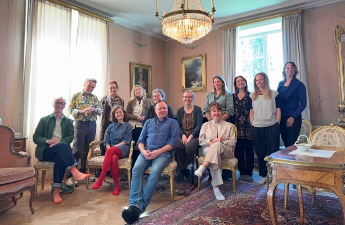

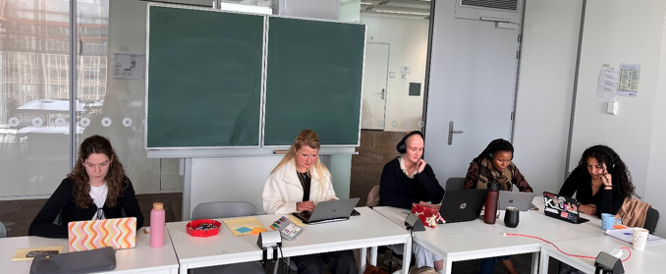
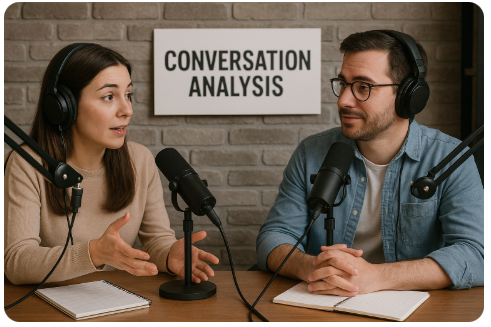
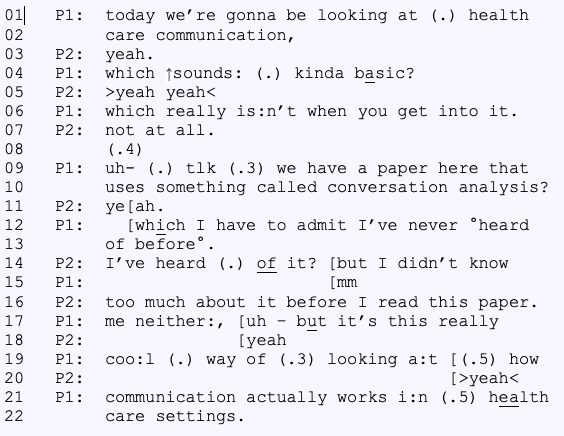
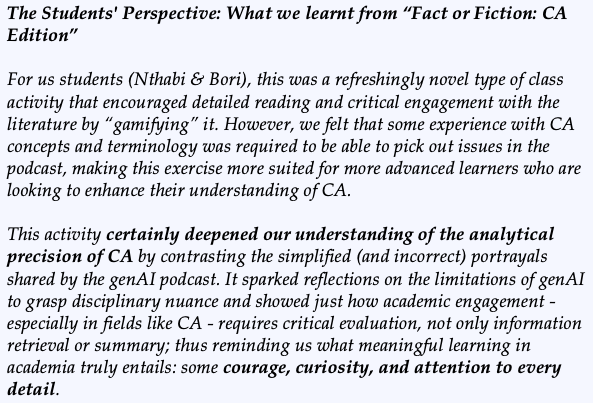


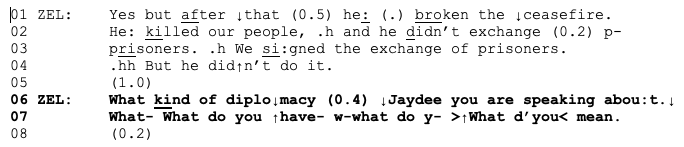
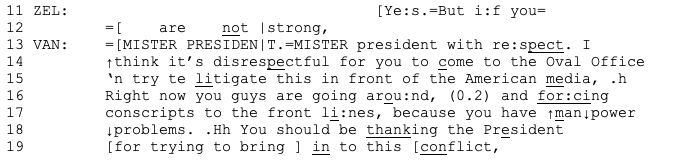


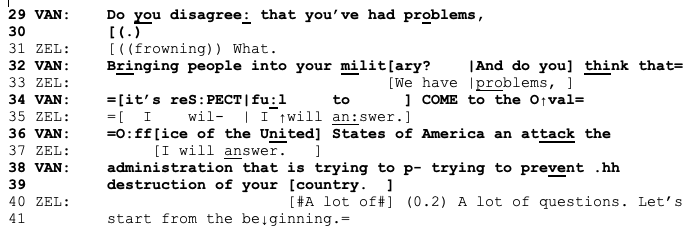
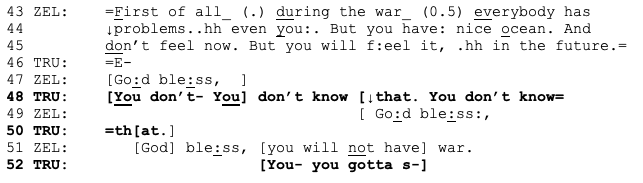
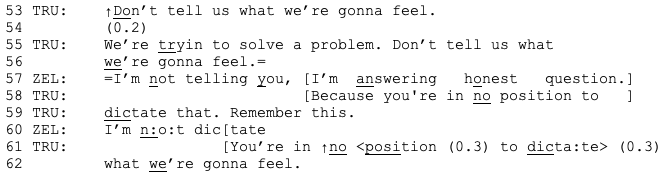
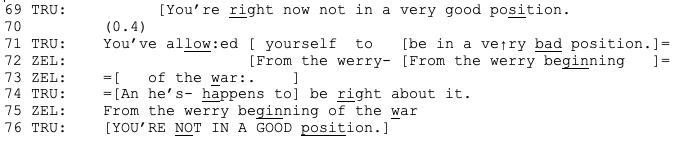
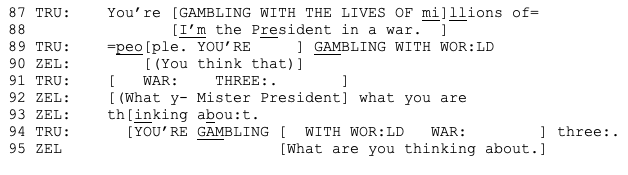

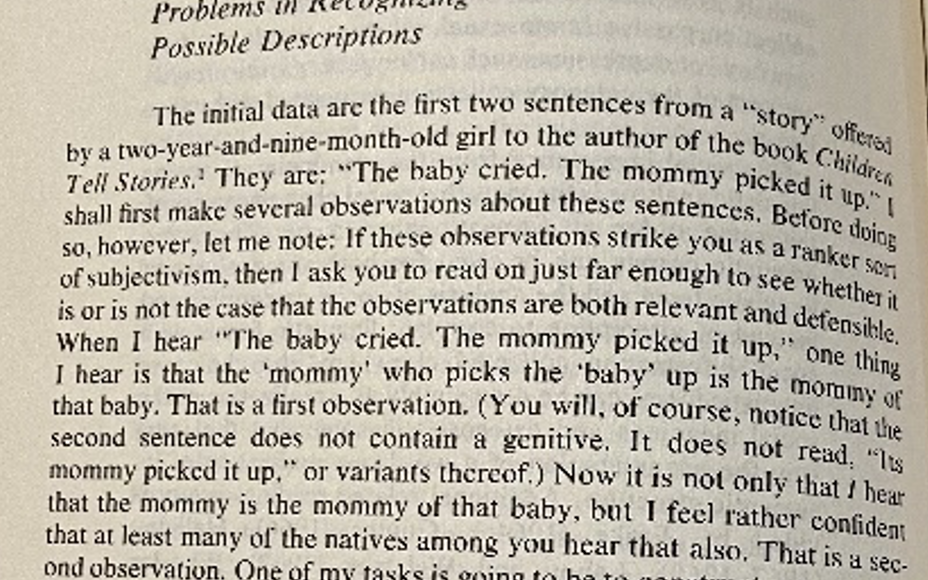
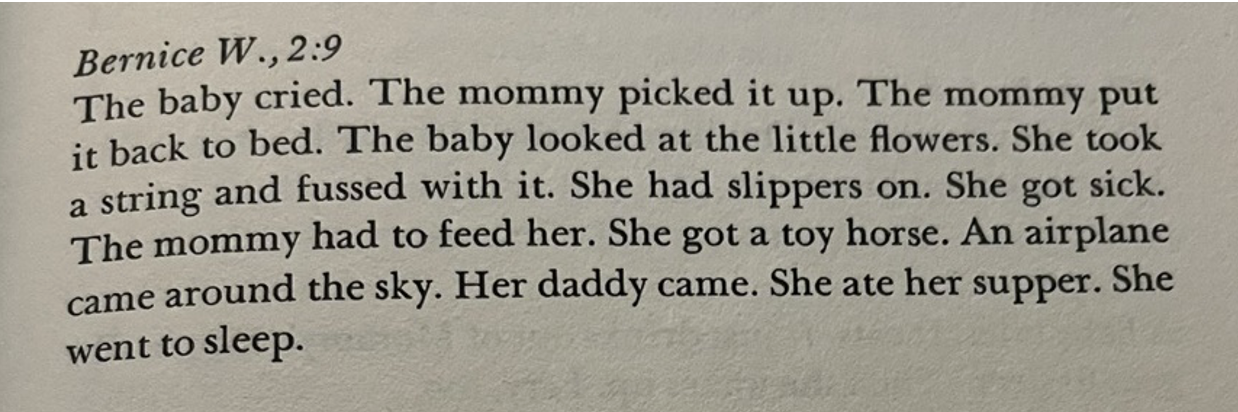



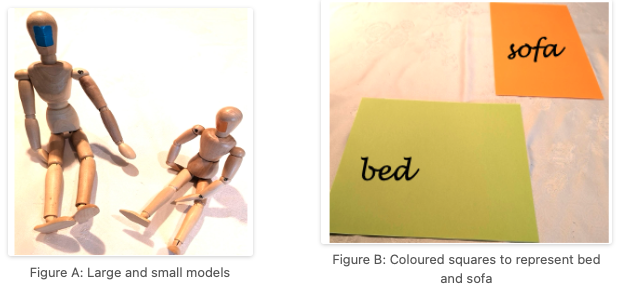
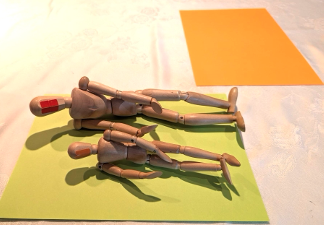


 Research on Language and Social Interaction - Blog